Political Flavors


The Federation Doesn’t Take Sexual Assault Very Seriously…

Posted in Editorials on September 30th, 2013
by
Tags:

Adam and I have been re-watching “Star Trek:The Next Generation” and we’re in the middle of Season 4 right now. When I was a teenager, I would have told you that this was the best show on television ever. Watching it again at age 30, I am still enjoying it very much, but for the first time I can see what people don’t like about Star Trek – that it can be painfully earnest, that it’s a bit silly, that sometimes the science doesn’t make any sense. And now that I can analyze it with a feminist lens, there’s a lot to talk about.

Generally, I think they show is very good – especially for it’s time – in terms of gender roles. I know the common criticism that Troi and Beverly Crusher are the main women characters and they are also the “caretakers” but that they are people with strengths, weaknesses and personalities of their own is always clear. What does become annoying is that Troi rarely has an episode that isn’t directly related to her sexuality in some way. Dr. Crusher, on the other hand is the virginal Madonna. At this point in the series, all the other characters have gotten laid (except possibly Wesley, but he’s very young we’ve seen him dating at least three different women) but Beverly Crusher is someone’s mother, so no sex for her! I do recall a later episode where she gets lucky, but it takes quite a while to happen, something I find unrealistic for someone as smart and beautiful – and as we see from several of her “will-they-or-won’t-they” moments with Picard very interested in sex.

William Riker, I think is a very interesting character. He is extremely masculine, but he is a feminist, or at the least staunchly egalitarian. He’s big on consent, as we see in “The Vengance Factor.” Sex is not a conquest for him but an experience he shares with others. When Yuta seems unsure what she wants, he stops things right away. He’s not possessive or jealous which seems to clash with what our current idea of masculinity is right now. Riker’s relationship with Troi could be considered open or poly. They love each other but they often say they reject the idea that they “own” each other.

The one bump in this very progressive road, is the way the show handles sexual assault, or at least the threat, accusation or attempts of sexual assault which come up quite often for a show Netflix says is good for kids ages 8 and up.

Tasha Yar – The Enterprise-D’s short lived first chief of security was brash, strong and loyal. She also referred to the fact that she escaped a planet where “rape gangs” were common. Nothing is said about the fact that this is common for women in war torn places, this is pretty much “rape as character development.”

“Code of Honor” – This episode is extremely racist. But there is an additional squick factor. Tasha Yar is about to be “forced to marry” Lutan and Troi asks her about the fact that when they first met, she was attracted to him. What kind of question is that? Hey I know this guy kidnapped you and you have to fight his girlfriend to the death lest you are “forced to marry him” but you thought he was cute before this all went down, so it’s kind of your fault, right? The whole context given her past as an assault survivor makes this even worse.

“The Child” – This episode is clearly about Troi being violated by an alien force. This actually happens to her quite often, sadly, but in this case, it’s explicitly sexual, as she is impregnated without her consent. No one asks her how she feels about that, even during a senior staff meeting where people openly debate whether or not she should have an abortion – without asking for her input and talking as if she wasn’t in the room. For the record, Worf wanted to force her to abort, Data wanted to force her to give birth. Picard at least said that she had the final say in what happened, but again, no concern for the fact that she was violated.

A Matter of Perspective” – In this episode we see a series of events from three perspectives, Rikers, Manua’s – a woman who accuses him of trying to rape her and of killing her husband, and Dr. Nel Apgar, the man Riker is accused of killing. Riker claims that Manua came on to him and he rejected her. Apgar told his research assistant that Riker and Manua were both kissing enthusiastically when he walked in on them. After Riker is found innocent of murder, the fact that he was also accused of attempted rape is entirely forgotten and never mentioned again. As much as I dislike the “women lie about being raped” trope, and as infuriating as it is that the title implies that rape is just “a matter of perspective” I think it’s inconsistent with Riker’s character and with the series that he would do such a thing. Starfleet officers make mistakes, but do not commit vicious assaults. As a viewer, I am satisfied that he is innocent. However, within the universe of the show, I am uncomfortable with how easily this accusation is dismissed, especially because the Manua never recants.

Ménage à Troi” – aka Lwaxana Troi is a Big, Damn Hero. In this episode, Riker, Troi and Lwaxana are kidnapped by Ferengi, one of whom – Daimon Tog, has expressed romantic interest in Lwxanna. There’s an extremely creepy scene where Daimon Tog summons the women to his quarters naked, via transporters. Ferengi women do not wear clothing. It’s also established that Betazed culture is very body positive and rituals like marriage are frequently performed naked. Yet, Troi and Lwaxanna are acting anxious, and it’s not because they are insecure about their bodies, it’s clear they are afraid they are about to be raped. Lwaxanna offers to go willingly if Troi and Riker are set free. And then Daimon Tog attempts to “seduce” her. We see Troi grimace as she emphatically feels her mother’s disgust. But Lwaxanna manages to talk her way out of it before the assault is completed. At the end of the show, once all three captives have been rescued, The Enterprise flies off into the sunset. Apparently it’s no big deal that the Ferengi just kidnapped two Federation officers and the Ambassador from Betazed to the Federation, and that Daimon Tog assaulted and attempted to rape a Federation ambassador. Just another crazy day on the Enterprise! Especially because the show ended on a humorous note with Picard’s convincing Daimon Tog that he was Lwaxanna’s true love and would stop at nothing to get her back. Who cares that a Ferengi was about to rape her? It’s played for the lulz. Also, I totes see what you did there Star Trek! Ménage à Troi! GET IT?!

“Devil’s Due” – Nine years before Bedazzled, and twelve years before “Shortcut to Happiness” there was another knock off of “The Devil and Daniel Webster” where the Devil is actually a hot chick. Sort of. In “Devil’s Due,” a woman, Ardra appears to a planet the Enterprise is visiting and claims to be a god that the people there pledged to be slaves to upon her return 1,000 years ago. Picard is really insistent that she’s not who she says she is. It’s a crappy version of “Who Watches The Watchers.” Picard winds up having to prove his case before a court where Data is the sole judge. If he loses, he will belong to Ardra “mind, body, and soul” forever. As Ardra previously tried to seduce Picard and was rejected, we know she’s extremely keen on the body part. No one cares, at all, that someone is trying to kidnap a the Federation flagship’s Captain and make him a sex slave for life. It’s played alternately as comedy and for titillation.

“First Contact” [fourth season episode, not the movie] – Riker is injured while surveying a civilization about to test their warp drive capabilities for the first time. He is recovering in a hospital where the doctors have him quarantined and under security as they correctly suspect he is an alien. When he realizes they know he isn’t one of them, he tries to escape. A creepy chick sneaks into his hospital room and says she will help him flee in exchange for sex, and that she’s always wanted to do it with an alien. He says no repeatedly. She insists, and whines. In the next scene, Riker has escaped. This is never mentioned or addressed in any way. Like in “Devil’s Due” it’s supposed to be kind of funny and we are meant to boggle at why Riker wouldn’t want to get down with the cute geek girl, I mean, he is a ladies’ man, right? What’s the problem?

Roddenberry’s vision was that in the future, that everyone is equal regardless of gender or ethnicity would be taken for granted as a matter of fact. And the show reflects that, for the most part. But I hope even the best shows can withstand some feminist media criticism, no matter how faithful the fandom.


Are Red Pill Women Really Like Serena Joy? Or, How Dare I Make An Snarky Literary Reference You Don’t Understand?!

Posted in Editorials on August 12th, 2013
by

UPDATE: This post has been corrected. It originally referred to the story of Sarah and Abraham. The Handmaid’s Tale refers to the story of Rachel and Jacob. Although both are about wives sanctioning surrogate mothers.

Last week I put up a post on /r/TheBluePill called “DanaBanana is not only an ignorant homophobe but a disgusting racist as well.”

But rather than apologize for, or even vainly attempt to rationalize her vicious racism, what DanaBanana really wants to talk about is her objection to is being called “Serena Joy.”

I actually paused before I used that literary reference. Because even though Serena Joy does many things to uphold the social order and her place in it, by allowing and encouraging Offred to have an affair with Nick, she’s also undermining it. There’s nuance here. She’s a hypocrite and coward, the banality of evil rather than a caricature of it. And I hesitate to ascribe any nuance or self-awareness to “Red Pill Women” because I really don’t see anything from them but ingratiating denial. They’re more like The Aunts, quite frankly. But that’s not as catchy.

To DanaBanana’s objections (spelling and grammar original):

in the book the handmaids tale, a group of seperatist christians take over a part of the disintegrating US and establish a christian patriarchy state called gilead in which a bizarre and unique form of polygyny is practiced due to low low female fertility. fertile women who are not “properly” married are apportioned out as “handmaids” to the powerful men of gilead and a joyless, ritual insemination is performed in an attempt to create more babies, any baby conceived of these unions is stripped form the handmaid and given to the “wife” to raise as her own, the handmaids are rotated and eventually consigned to drudge work when used up. serena joy is the wife of one such man, and had agitated strongly for this “religious revival” in the prewar days, and is now shown living with the consequences of what she fought for, a loathesome ceremony in which the handmaid lies down on the pelvis of the wife to be inseminated as pleasurelessly as possible for all involved.

whats never addressed is why this SPECIFIC form of joyless dystopian polygyny comes into being, and its my contention that it does so NOT because of MEN, but because it is an attempt by WOMEN (serena joy) to create a patriarchy that CATERS TO THEM and not to the desires and wishes of MEN.

there was no reason males would establish such a bizarre ritual, we know what polygyny looks like when males establish it, married men just take concubines and additional wives at will without a by your leave from their principle wives and they enjoy it.

enjoy is the key word here, what the “serena joys” established was a polygyny in which both the males and the concubines experience ZERO pleasure from the experince SPECIFICALLY In an attempt to make sure the WIVES dont suffer, this is NOT a masculinist or red pill fantasy world, it is a DISTINCTLY feminist and female-centric fantasy world in which the wants and needs of men are wholly secondary to the refined sensibilities of the “wives” who want to micromanage their husbands “necessary” infidelities by BEING THERE and making sure no male joy occurs.

there is not one particle of the “red pill for women” that advocates rearranging society to suit the interests of women, but to suit the interests of MEN. there are no red pill women advocating polygyny, but if they did it would be the natural normal (though not great for civilization), previously near universal polygyny humans had practiced for 10000s of years, not one designed to try to not hurt womens feelings. im sure there are a million legitimate ways to criticize red pill women from outside of it, but this one is particularly inapt and shallow, and denotes not only no understanding of that which is being criticized nor the literary reference with which the criticism is being made

This specific form of “joyless dystopian polygyny” is an interpretation of the Old Testament story of Rachel and Jacob. This is explicit, reading this Bible passage aloud is a part of the ritual sexual intercourse. The Commander literally reads it to Serena and Offred before they begin. Margaret Atwood visited Afghanistan in 1978, and the book is largely believed to be influenced by the Taliban’s treatment of women. Atwood was not writing about matriarchy, she was writing about theocracy.

In the Handmaid’s Tale, there are a few women who have power over other women. But there is no mention of women having the kinds of leadership roles in the church that would allow them to choose this interpretation of this story to suit their own interests. The book shows how the Serena Joys of this world are in many ways just as trapped as the Handmaids are. Serena is humiliated and disgusted by the ceremony – it’s not something that she and women like her thought up. It was created by the religious authorities specifically to take any pleasure away from the act. They knew that wealthy families desperately wanted more children, but to give them any degree of autonomy over how they were conceived would also sanction affairs like the one Offred and Nick eventually had – life affirming and revolutionary. The feelings of shame and defeat the ceremony created did not “cater to women” – they were a way to control the upper class and retain power.

Next week on Red Pill Women – why 1984 is about the evils of feminism, why Winston was a total Alpha and how we should all be Red Pill women like Julia.

The Projection of Hate – Dzhokhar Tsarnaev, Rolling Stone and Right Wing Sex Panic

Posted in Editorials on July 19th, 2013
by
Tags:

Misogyny is a part of many right wing ideologies – religious fundamentalists and Red Pill/MRA/PUA types share it. And it strongly correlates with being generally politically conservative – if you look at the legislation agenda of the Republican party, it would seem that the only thing they care about is oppressing (women’s) sexuality.

One aspect of this worldview is the belief that the only thing that matters about a woman is her appearance. Religious men might cloak this in talking about a woman’s “ability to be a wife and mother” but often they simply mean her capacity as a sex object first and baby machine second. Red Pill types are far more blatant about this. Their constant drumbeat is that physical attraction is the only reason a man would be involved with a woman on any level. The generic Republican crowd expresses this when they insist that feminists are ugly, when they made a big deal about Sarah Palin being hot – to them how attractive you are is evidence of how well you conform to their ideas.

And no matter how poorly they react to a woman based on her appearance, they are more obsessed with women’s sexuality. Efforts to control it, either through sexist comments, legislating reproductive services or using “game” take up a lot of their time and attention. They are vigilant.

I think this explains some of the panic over the Rolling Stone cover featuring Dzhokhar Tsarnaev. There are several different reasons people are offended by the cover. I even empathize, a little bit with people who say that criminals shouldn’t get so much attention, that they shouldn’t be rock stars – that if they want infamy we should give them anonymity. But that’s not what I’m talking about.

Amanda Marcotte wrote about how people are totally losing their minds over the cognitive dissonance that a terrorist could be handsome. There are some people in the world who actually believe that real life is a fairy tale and that the good people are always good looking and the evil people are always ugly. And they can’t handle the cognitive dissonance.

But something else, I saw in the reactions to Marcotte on twitter was something far more sinister.

They are all filled with incoherent rage by the tweet:

The responses I’ve highlighted above don’t simply fall into the “don’t glamorize criminals” category or even the “obviously villains are ugly, SHUT UP THEY ARE!” category. This line of reasoning goes:

1. Amanda Marcotte said Dzhokhar Tsarnaev is handsome.
2. Therefore she thinks he’s a good person AND she wants to have sex with him.

It doesn’t really follow, at all. But I would say that this conclusion does fit in with their warped misogyny. Men who objectify every woman they meet are projecting that women must do the same; if a woman says a man is handsome, then she must feel about him the way he feels about attractive women…!

This also fits with their warped view of female sexuality and the “theory” of “hypergamy.” Many men are obsessed with why women like “bad boys” instead of “nice guys.” Simply stating that an evil man is handsome must be proof of some deeper attraction, they think. And here, right here on twitter is a woman, nay, a feminist – admitting it! She must be punished! Don’t let her get away!

It’s not pretty to look at. But there is so much of it to see.

Religion’s Optical Illustion

Posted in Editorials, Personal Essays on July 18th, 2013
by
Tags:


Vernal Falls, Yosemite California Image credit: Author

A friend forwarded to me this heartbreaking article about a young man who died of a drug overdose after “ex-gay” “reparative therapy” failed to make him straight.

This sentence jumped out at me:

“And since sexuality cannot be separated from the self, we had taught Ryan to hate himself. “

And it made me angry. Their ignorance and stubbornness and refusal to question their faith until it was too late resulted in the death of their son, although I’m sure that they know that.

I started thinking about what I have touched on before, that putting distance between myself and the church, only makes me angrier about the injustices and evils carried on in its name. And I think I finally understand why. I thought that distance in time, and in emotion and in physical space would calm me, and soothe my conscience. But the farther away that I get, the more damage I see to innocent people.

I imagine myself in a rowboat, pushing off from a small oceanfront cabin, built into the bottom of a hill. And as I row, I see that the hill is in fact a mountain. And no matter how far I row, I can’t see all of it at once. My distance is only serving to emphasize how big it really is. And I can only conceive of the mountain as it is today. I cannot truly imagine the span of it’s history across centuries. I row harder and harder, yet still it grows and grows. If I had a camera, I would not be able to zoom out far enough to capture it with any panoramic lens.

I do not know if it is possible to get so far away that it will appear to shrink.

Snarky Trumps Creepy

Posted in Personal Essays on July 16th, 2013
by
Tags:

So, Chris Brecheen’s post has inspired me to relate a story that happened almost ten years ago.

Some of the women in the comments of that post related stories about how they responded to creepy men or stuck up for women who were being harassed in public. So here’s mine.

It was spring of 2004, I was in my final semester of college and I was out having a beer with two friends – a man and a woman – we’ll call them Bob and Jane. We were in one of the “nice” bars in our college town which meant that the tables and chairs were in good repair, the wood finished walls were polished, the selection of beers was excellent and IDs were actually checked. As we went up to the bar for a drink, two clearly inebriated older men approached us. They were in their mid to late 40’s and wearing suits, with their ties and shirt buttons undone.

“Hey!” One said to Jane. “You’re awfully pretty, did you know that?”

I had no idea that sometimes movie cliches appeared in real life.

Jane looked down at her shoes. They continued, asking what she was studying, if she had a boyfriend. She gave quiet, one word answers. I was fuming at how upset they were making my friend. I started thinking about everything I wanted to say to them, but I wasn’t sure how to do it without embarrassing Jane further.

“Ugh, these guys.” Bob said. “Let’s just go to our table.”

We took our drinks and sat down, trying to ignore the obnoxious men.

About ten minutes later, they sat down at the table next to us.

“Hey you!” one of them said directly to me. “I’m sorry we ignored you before for your friend.” I could write a dissertation on the absurd misogyny of that statement, but I’ll let it go for now. “You’re not so bad yourself.” I rolled my eyes.

“Yeah,” said the other one. “I mean, what are two girls like you doing with a guy like him?” he pointed to Bob.

Something snapped in my head. I was done caring about appearing to be a nice girl.

I looked right at him and said, matter-of-factly “He’s really good in bed.”

There was a beat and then the two drunk dudes looked at each other with eyebrows raised and eyes widened. These assholes thought I was being serious. They muttered an incoherent apology and I think they even nodded respectfully towards Bob, who was trying not to laugh. They left us alone for the rest of the night.

I couldn’t believe that it worked, but it did, and that was when I learned to trust my inner smartass. Joy Nash said that “the secret to turning staircase wit into regular old every day wit is practice.” So, if you feel it’s safe to do so, let go of your need to be the nice girl. Let the devil on your shoulder out when you need her.

Just as in Chris Brecheen’s story it seems that creepy dudes have no sense of humor or irony. My ridiculous and silly comeback rang true in their worldview, even though I was only trying to be obnoxious. These men are extremely insecure which is also why you may risk violence in provoking them. Use your judgment when engaging them, but know that there’s not much to these guys but swagger and inadequacy.

Some Musings on the Psychology of Minecraft

Posted in Editorials on July 11th, 2013
by
Tags:

I’ve been playing a lot of Minecraft lately. It’s a fun game and it reminds me of The Legend of Zelda games I loved as a kid. Recently I started playing in multiplayer mode and something happened that made me think about they psychology of video games.

I know that one of the reasons video games are so pleasurable is that they give people rewards at quicker and more predictable rates thank other tasks. I can’t really say this is something that I think about consciously, but I do find myself having built a castle or mined some diamonds feeling like I have “accomplished something” when in reality, I haven’t. I just played a game. Leisure activities are necessary, but they aren’t a productive use of my time.

On Sunday I was exploring a cave in Minecraft and I was knocked into the very mineshaft I was looking for by some zombies. They jumped down and killed me. In Minecraft, if you aren’t playing in hardcore mode, you will “respawn” (restart) the game at a certain point, and all of the items/loot you were carrying with you will remain at the place you died for about five minutes. With literally nothing to lose, I sprinted back to the cave to find two zombies, one of which was wearing my armor! This is an often humorous aspect of the game. Zombies will pick up anything they find and try and use it against you. Previously I fought one off that was wielding a piece of rotting flesh that had been dropped by another zombie I had killed. On this occasion, I defeated them both with one of my shovels that they had not yet gotten to and retrieved my armor.

I paused for a moment, feeling kind of weird about re-equiping it. I felt grossed out because a zombie was just wearing it. Then I figured that it was now an extra special trophy of my victory over the zombies.

Then I thought about how this game has tapped into some pretty deep areas of my brain. Firstly I identify enough with my avatar that upon seeing an enemy NPC wearing “my armor” it I was startled, and amusedly indignant. There has been some research about why and how people identify with their video game avatars. It reminds me of the research about how the brain changes to think about a car one is driving. Some theorize that you start to perceive the car as a part of your body and that it changes your proprioception. There is evidence that people with bumper stickers on their car are more aggressive drivers. Similar to having a custom made avatar perhaps?

Second, I am so invested in this game that my innate mechanism for disgust was activated by the idea of my avatar wearing armor that a cartoonish zombie character was just “wearing.” I did have a brief feeling that I was the one putting on dirty clothes. Then I laughed at the idea of getting squicked out over pixels on a screen.

Our brains are more plastic than we may be comfortable admitting. And like Minecraft, almost infinitely moddable. Be careful what you do with yours.

There’s no going back.

Posted in Editorials on July 9th, 2013
by
Tags:

This post is adapted from a recent service I led at my Unitarian Universalist congregation. I gave the presentation with accompanying powerpoint slides, and have linked to relevant images in this post where appropriate.

The reading I gave before my sermon was from the Book of Genesis 3: 1-7

Now the serpent was more crafty than any of the wild animals the Lord God had made.
He said to the woman,
“Did God really say,
‘You must not eat from any tree in the garden’?”
The woman said to the serpent,
“We may eat fruit from the trees in the garden,
but God did say,
‘You must not eat fruit from the tree that is in the middle of the garden,
and you must not touch it,
or you will die.’”
“You will not certainly die,”
the serpent said to the woman.
“For God knows that when you eat from it your eyes will be opened,
and you will be like God,
knowing good and evil.”
When the woman saw that the fruit of the tree was good for food and pleasing to the eye,
and also desirable for gaining wisdom,
she took some and ate it.
She also gave some to her husband,
who was with her,
and he ate it.
Then the eyes of both of them were opened

February 24, 2013 was Oscar Night. I settled in to watch the Academy Awards with some Chinese takeout and Twitter open on my iPhone. Seth MacFarlane was hosting the show, and I was soon appalled by his inane and sexist humor. No woman was spared, from those who disrobed in movies, to underage actresses he saw as targets for lecherous older movie stars – beat after beat came at the expense of women. Women who were victims of domestic violence or eating disorders, women who were sex workers, women he deemed too beautiful to have anything worthwhile to say, all became subjects of ridicule. I watched the feminists I knew on Twitter go through several stages – denial, then anger, and finally scathing satire.

I tweeted a few snarky comments of my own, and my enjoyment of the evening came more from blowing off steam about this chauvinist retro mess than the paltry excuse for comedy Hollywood was serving up. My mother and my brother didn’t get it. Why couldn’t I just brush it off or ignore how demeaning the humor was? This sermon is an attempt to explain.

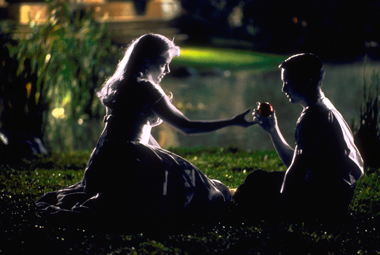
Last summer I lead a service about the Unitarian Universalist idea that revelation is not sealed. As UUs we believe that there is no one holy book or source of information that contains all the answers to life’s questions. And in our search for truth and meaning, we have to admit that there is so much that we do not know. This is a huge responsibility. And this is part of what I mean when I say that there’s no going back. There are some things that we can come to know, that we can never not know again. Last summer, I drew a comparison to Eve and The Apple, and still today, I tend to side with Eve. I’d rather know than not know. In fact, later on in the Bible, in Isah 5:20 it is written,

Woe to those who call evil good and good evil

…And yet we were not supossed to know the difference in the first place.

In January, I spoke about the “Toolbox of Justice.” Social justice is like a toolbox, feminism, anti-racism and other struggles for human rights are not just political movements but ways to understand the world. We can use the ideas found in these movements both to create change and to recognize injustice in our daily lives. Once we understand that a word or an action is harmful to others, our conscience reminds us not to do it again. While some may remain ignorant about why a certain phrase is offensive, or how systemic injustice hurts people – once you know, there’s no going back – there is no excuse for passivity.

There is evidence for this idea embedded within our bodies.

The basal ganglia is a structure located in the base of our forebrain. Among other things, it is responsible for automaticity – the ability to do things deliberately but without much conscious thought. When people refer to something as “like riding a bike,” they are talking about something that can be controlled by this area of the brain. There are many things we can teach ourselves to do without much thought, walking, typing, knitting, even driving – if you have ever found yourself lost in thought and arriving safely at your destination but a bit startled that you don’t remember every turn on a familiar route, thank your basal ganglia. With even complex tasks, once we learn how to do them, we can never forget.

More abstractly, people have compared understanding the basic tenets of feminism to the 1999 Wachowski Brothers movie “The Matrix” starring Keanu Reaves.

And sometimes it feels that way. It did on Oscar night. I couldn’t ignore Seth Meyers sexist bonanza anymore than I could ignore a fire alarm or not turn around when someone calls my name. I can’t unfeminist myself, and I don’t think I would want to, most of the time.

But what does my experience have to do with anyone else? Just because I can’t go back does that mean that no one else can? I think there’s evidence that this is so.

Steven Pinker’s book The Better Angels of Our Nature posits that humanity has gotten less violent over time. Despite the horrors of the twentieth century, which was also the most well documented era in human history, wars in past centuries killed even greater percentages of the population than both World Wars did respectively. Slavery, torture and capital punishment have also declined over time as we have seen an increase in human rights worldwide. Pinker cites the enlightenment, widespread education and social movements like feminism as the cause of this decline in violence and cruelty. There is no reason to think that even though horrific acts still do occur that they are increasing or will increase in the future. Our society is becoming less violent, and signs point to it becoming more peaceful still, with studies of younger generations showing that young people today are less racist and more tolerant than ever before.

In fact, our popular entertainment relies on the fact that harmful and bigoted ideas of the past, are entirely alien to audiences today. This may be a bit too optimistic at times, but that doesn’t stop it from being a commonly used trope.

The movie Pleasantville explored the idea of how two teenagers living in the 1990’s would survive in a 1950’s tv sitcom. The provincial mores of the time were played both for comedy and shock value. However, the filmmakers were aware of the larger implications of this idea.

A more serious endeavor, AMC’s Mad Men plays the sexism, racism and homophobia of a 1960’s advertising agency straight, for dramatic effect. To identify with the female, gay or people of color characters on the show is often a lonely and desperate experience. But there would be little value in the great lengths taken to make the show realistic if our world had not undergone so many changes.

Alternately, the Star Trek television series and movies portray a future without poverty, or bigotry. Gene Roddenberry’s vision of utopia was flawed at times, but he sensed that social progress would only continue to march on into the future.

In real life, there are countless examples of how a small change in progress for human rights lead to bigger and bigger things. The integration of the United States military in 1948 was the first large scale attempt at racial desegregation in the US. Although it was met with resistance by some, it was a large victory for the African American Civil Rights Movement. And it set the stage for efforts to desegregate schools and other institutions. The experiences of white soldiers, serving alongside black soldiers contributed to changing ideas about race in America.

Harvey Milk, the first openly gay city supervisor of San Francisco California, famously encouraged his gay and lesbian friends and supporters to come out of the closet. He said, “Once and for all, break down the myths, destroy the lies and distortions. For your sake. For their sake. For the sake of the youngsters who are becoming scared.” He knew what social scientists would later prove statistically – that the number one indicator of a person’s support for the rights of Gender and Sexual Minorities was whether or not they knew an out GLBTQ person. Once someone knows that their family member, their friend, their co-worker or neighbor will face harm and discrimination, it’s enough to change their mind. There’s no going back.

UU Minister David McClean has spoken about this quotation by the Reverend Dr. Martin Luther Kind Jr.:

“The Arc of the Moral Universe Is Long, but It Bends Toward Justice”

Reverend McClean said that he believes that this is not just a profound and inspiring statement but something that is literally true – a natural law of the universe. I’m still considering this. Sometimes it feels like ignorance and hatred bog us down as if we were trying to run through deep mud. Sometimes we get distracted and confused that we lose sight of our goals and fight with each other in circles instead of for one another, shoulder to shoulder. But when panning out and looking at ourselves from decades or even centuries past, we can see a pattern. Time and social progress both move in one direction – forward.

I don’t know who will be hosting the next Academy Awards Ceremony. But unless they have a time machine, I’m hopeful that it can only get better.

Anti-feminism is an appeal to force.

Posted in Editorials on June 27th, 2013
by
Tags:

I’ve written before about how anti-feminism is an appeal to force.

A common MRA argument goes like this: since men are physically stronger than women, everything women have men could take away at any moment. To which I say, “No shit, Sherlock.” Does anyone ever think that women are ever unaware of their relative physical weakness in relation to men, even for a second?

I’ve been hanging out a lot lately at /r/TheBluePill which is a subreddit that satirizes “The Red Pill” a kind of super hardcore MRA/PUA philosophy.

They’ve added Red Pill Women, for ladies who agree that they ain’t shit. There I came across this gem by /u/DaddyMonster

Ladies… Men tend to find women’s lack of physical strength endearing. Arousing even. I know it makes me feel all daddylike.

Enjoy men’s strength. Marvel at it. Isn’t it sweet when you know that a man could squeeze the life out you easily, and he knows it too, but he won’t hurt you (any more than feels good)? He might manhandle you. He might be rough. He might even be very rough, but he will not truly hurt you.

A tingle of fear, safely in his strong arms you know 😉

Something that people frequently lament is that Red Pill effluvia occasionally contains a drop of truth. Confidence is sexy, for example. But what disturbs me more than how inane and misogynist they are is when they stumble on something really important and then completely miss the point.

Red Pillers frequently talk about how it’s so much more easy for (straight) women to get laid than (straight) men. They throw out stereotypes – “women don’t really like sex,” reveal their madonna/whore complexes – “women who are promiscuous have less value,” and appeal to evolutionary psychology – “eggs are expensive, sperm is cheap.” I’m not going to deny that there are social pressures on women to limit and feel ashamed of their sexualities. The difference is that feminists think that this shame is bad, and Red Pillers claim that it’s natural and good. They see female sexuality as a force of chaotic evil.

So “DaddyMonster” sees this fear women have, thinks about those who eroticize it and concludes that it’s all so very sweet. He never considered that this truth about men and women, this primal fear, is the reason it’s much harder for men to get laid. Red Pillers like to think that they know the truth. That women are “hypergamous” vending machines – say the right things “display high value” and sex pops out. It’s a lot simpler than that. It’s about self preservation.*

If anti-feminism is an appeal to force, pickup-artistry and game is an attempt to sell that force as sexy and fun.

UPDATE: In response to the question, “Why do bluepillers react so violently against our philosophies and methods?” [Violently, really?] DaddyMonster replied:

Merely poking or even beating it with a stick doesn’t work. You need to annihilate it. It needs to hurt.

Sharp sticks…

This is from the man who thinks that it’s “sweet” that most men could “squeeze the life out of” their female partners at any given moment.
_
*

*Via Dan Savage

I’m now a moderator at /r/UUReddit!

Posted in Site News on June 21st, 2013
by
Tags:

The Unitarian Universalism subreddit on Reddit has been sadly neglected. There are often very interesting discussions, but content is sparse and legitimate links and discussions were often caught in the spam filter, never to see the light of day. I asked the moderator if I could help out and was added immediately. Sometimes the best way to get what you want is to ask for it!

You can check it our here.

When Bill Donahue Is Right

Posted in Editorials on May 20th, 2013
by
Tags:

Nicholas Coppola married his husband in October 2012. He is also Catholic and was active in his parish as a lector, a Eucharistic minister who visited ill and housebound Catholics, a member of the consolation ministry, a member of the St. Vincent DePaul society, and a religious educator.

In January, the pastor at St. Anthony’s Roman Catholic Church in Oceanside stripped Coppola of his jobs as a religious education teacher, lector and visitation minister. A top aide to Murphy had conveyed concerns to the parish after the bishop received an anonymous letter pointing out that Coppola wed his partner under New York’s new gay marriage law.

In response, 18,500 people signed a petition on the website of “Faithful America” a progressive Christian organization – asking for Coppola to be reinstated. How did the Diocese of Rockville Centre respond?

The diocese rejected his reinstatement request, saying Coppola was fired because “by marrying under New York State’s same-sex marriage law, he took a public position against church teachings.”

“The Catholic Church recognizes that all persons share equally in the dignity of being human and are entitled to have that human dignity protected,” Diocese spokeman Sean Nolan said in a statement last week. “This does not, however, justify the creation of a new definition for marriage, a term whose traditional meaning is of critical importance to the furtherance of fundamental societal interests.”

Bill Donahue from the Catholic league called the 18,500 people who are loving their neighbor, “bullies.”

The American people respect the autonomy of religious institutions to craft their own rules and regulations, and they do not look kindly on bullying.

Charming.

Here’s the problem. Bill Donahue is wrong that the people who signed the Faithful America petition are bullies. They’re not. They are misguided people who for some reason think that the Catholic Church is a democracy or cares about public opinion. And that’s where I am inclined to agree with him.

The internal affairs of the Catholic Church are not the business of the public, and this includes outside advocacy groups as well as government agencies. Among the internal issues of the Church are employment decisions. Just as it is the right of a yeshiva to insist that its employees abide by Judaic strictures, it is the right of a Catholic school to insist that its employees respect Catholic teachings. Regrettably, GLAAD, Dignity and Faithful America show nothing but contempt for this verity.

I would disagree that Coppola is an “employee.” He’s not, he’s a volunteer. I also have a different view on the “contempt” that GLAAD and Fathful America are acting upon. They are not acting out of malice. I would call it righteous anger. I think that they are right to support Coppola, and to be outraged on his behalf. He did a lot of work for many years for his parish and he was cast aside for no other reason than bigotry based on a deeply flawed religion. But if they think that the Catholic Church can ever, or will ever be changed, they are sorrily mistaken.