Political Flavors


Fun Fridays: Cosmetics Reviews #1

Posted in Green Product Reviews on January 7th, 2011
by
Tags:

UPDATE 9/2/15: I must temper my glowing review below with the advisory that Origins uses child labor to produce it’s products.

Ever since I read “Not Just A Pretty Face: The Ugly Side of the Beauty Industry” by Stacy Malkin, I’ve slowly started to change the way I purchase and use cosmetics. I frequently consult the Skin Deep Database at The Campaign for Safe Cosmetics. I don’t have any hard and fast rules, but I try to purchase products that are at least one of the following: fragrance free, have organic ingredients and/or do not contain phthalates or parabens.

I will be reviewing some of the brands of natural cosmetics that I use regularly. To see all of the posts in this series, click here.

Origins

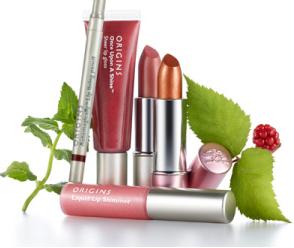
Origins is my absolute favorite brand of makeup. I was first introduced to them when a friend gave me a gift set containing bar soap, lotion and lip gloss. When I was experimenting with different looks for my wedding, I splurged on a few different lip sticks (both flower fusion and rain and shine brands) and eye liners to test shades and was not disappointed. The quality is excellent. I have purchased the products from Macy’s department stores and also from stand alone locations. The staff are always very helpful and will always let you test products. This year they have put out a natural ginger scented perfume. It’s not quite my style but worth sniffing the tester if you see it around.

Physicians Formula Organic Wear

This is the brand of makeup I can use every day. It’s in most drug stores and fairly affordable. I’m not a fan of foundation in general but have used their line. My every day powder is Physican’s Formula, and they make cases out of bamboo and recycled cardboard and also sell refills for your compacts to reduce packaging waste. I like their mascara although it is not waterproof. Their eyeshadow is also good quality but they do not have many colors to choose from currently.

The Naked Bee

The Naked Bee products are usually sold in gift shops, and cannot currently be purchased online unless you are buying in bulk for retail sale. I do stock up when I come across them. The lip gloss has a nice honeysuckle scent and the lotion is one of my favorites to cool irritated or dry skin.

The Meatball Shop: Wait Until the Crowds Die Down

Posted in Food and Drinks on January 5th, 2011
by
Tags:

Sliders from The Meatball Shop

My first restaurant review!  I love trying out the new “insert specialty food” place.  Whether it’s “that taco place,” “that bao place” or “that falafel place” I get super excited when a new restaurant opens up that has one particular specialty dish.  So, when The Meatball Shop opened up in the Lower East Side, I was dying to try it out.  Of course, I had to wait a few weeks until the crowd died down a bit, and it didn’t help that Yahoo!  had an article on their front page about the place.
But finally, a couple weeks ago, on a Sunday night, a fellow foodie friend and I decided to check out the place.  Even then, the place was still pretty crowded.  At about 5PM a wait for 2 was 45 minutes.  If you don’t want to wait, there are a couple options.  The bar seating is first come first serve, and they serve the full menu.  Or, if you’re lucky enough to have a place nearby, you can walk right up to the take-out counter and get your food to go.

The space itself is a bit cramped, especially when there are a lot of  people waiting.  There is a large bar that runs the length of the dining area, and the dining tables are one very large communal table (where my friend and I ended up sitting) and a handful of two-tops around the edge.  I’m not the biggest fan of communal tables.  It’s kinda like getting the middle seat on a airplane where you have to share the space; also it seems like everyone is eavesdropping on your conversation.

When you sit down, you get a laminated menu and a dry-erase marker to mark up the choices of what you want.  There are a lot of choices to make:  You pick the type of meat, the type of sauce, whether you want them “naked” (served plain), in a hero, over pasta, in a slider, in a salad, or in a brioche.  There are also several sides you can order.  Every day there are specials – for the types of meatballs and sauce as well as the sides.

We wanted to get a good sampling of the meatballs.  We ordered the “Special” meatball which that night was lamb – served “naked” style.  We also ordered 1 slider each of chicken, pork, beef, and vegetable.  We tried to sample all the sauces as well:   Tomato, Spicy Meat Sauce, Mushroom Gravy, Parmesan and Pesto.  If that weren’t enough we also ordered the Daily Green – which was Kale, and the Daily Roast Veggie – which was Squash.

The meal was pretty good.  My favorite meatball by far was the beef.  Sometimes you can’t change a classic.  A close second was the lamb – which was great!  The one disappointment was the veggie meatball.  Although the owners claim that this is one of their most popular orders for health nuts.  But, for me, I just don’t think you can have a meatball without meat!  The consistency just didn’t do it, it was falling apart on the plate, and it had a very plain taste.  Maybe we picked the wrong type of sauce to go with it – but I probably wouldn’t order that again.

If you do go: do NOT skip out on desserts.  The Ice cream sandwiches were excellent! You get to pick the cookie as well as the ice cream flavor (and yes, you can pick 2 different flavors of cookie) Hehe.  Again, we went with the special flavor – Oatmeal Ice cream.  With an oatmeal cookie and a ginger snap cookie.  My only complaint was that the cookies were not soft, so it was a little hard to eat with a spoon.  We also ordered an ice cream float – which were good, but not noteworthy.

Overall, I think it’s a fun place to visit.  While the beef and lamb meatball was excellent, a meatball is just something that I don’t usually crave, and it’s just not special enough food that I can’t easily get somewhere, or a food that can really be made so uniquely that a restaurant would be known for it.  If you do go, try to go at an off-time and make sure you go with a smaller group.  But I would wait until the hype dies down.

The Meatball Shop

84 Stanton Street
(between Allen & Orchard)
New York, NY 10002
Phone (212) 982-8895
Fax (212) 982-8859

Thursday-Saturday: Noon-4AM

Sunday-Wednesday: Noon-2AM

No Reservations

Are critics of Paterson racist? Are supporters blaming the victim?

Posted in Editorials on January 4th, 2011
by
Tags:

One of former New York Governor Paterson’s last actions in office was to commute the sentence of John White. Mr. White, who is Black, was convicted of second-degree manslaughter and third-degree criminal possession of a weapon. White, 57, shot Daniel Cicciaro Jr. on Aug. 9 2006 when Cicciaro was part of an angry mob of white teenagers who came to his house threatening violence against is son, and some say his wife. There was a rumor that White’s son Aaron had threatened to rape a classmate, but this was untrue.

I believe that in all respects, the story is tragic. Cicciaro was only 17 years old and I cannot imagine what his death must have been like for his family. I have never met him but it makes me sad to think of anyone dying at such a young age. However, I believe that Governor Paterson’s decision was justified. Although I believe in the Unitarian Universalist Principle of the inherent worth and dignity of every person, I do not see what choice White had- at the moment that he pulled the trigger he was acting in self defense. If his story is true, and the gun accidentally discharged when Cicciaro tried to grab it, then there is no action on his part to criticize. No one is above the law, but the law cannot forsee each circumstance that may arise, and that is one of the many reasons pardons and commutations exist.

This sentiment is reflected in Paterson’s statement:

“On August 9, 2006, a young life was lost, beliefs were challenged, lives were ruined and a community became distraught,” Paterson said of the White case. “No one intended this, yet everyone suffered. … The action I am taking today is one of understanding, forgiveness and hope, which I believe are the essential components of justice.” Read the rest of this entry »

Lady Brains and Delusional Minds

Posted in Book Reviews on January 3rd, 2011
by
Tags:

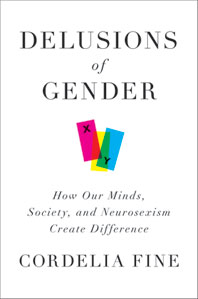
Delusions of Gender

How Our Minds, Society, and Neurosexism Create Difference

By Cordelia Fine

The Female Brain

By Louann Brizendine

Just-so stories abound in our media about how women “naturally” talk too much, are over-emotional, bad at math, or just plain stupid. How much of it was earnest science badly reported and how much of it was just mean-spirited evolutionary psychology, I never knew. And somewhere, lurking in the darker corners of my brain was the thought that maybe it was all true; and grounded in strong, peer-reviewed science that was easily replicated. But when those doubts loomed, I would always stop myself – the difference between men and women on a genetic level is the difference between XX and XY. How could having a little more genetic material make me a stupid, frivolous, gold-digger compared to all the smart, serious, chivalrous men? It never made sense, but was that because I had a puny lady brain?

I read Louann Brizendine’s “The Female Brain” immediately before “Delusions of Gender.” It had been sitting on my bookshelf since it’s controversial publication. I read it first; knowing that it is one of the works Fine is highly critical of.

Brizendine acknowledges my quandary – if men and women have almost identical genetic makeup’s, how could our brains be so different as a result of biology alone? Her answer: hormones. The way I understood her hypothesis was that she saw men’s and women’s brains as computers with identical hard drive space and RAM. But estrogen and testosterone were like different operating systems – an iPhone and a Droid. This is a seductively simple point of view, and absurdities appear quickly. Brizendine actually suggests that women should schedule job interviews or oral exams on the days of their menstrual cycle when estrogen levels are highest because there is evidence that estrogen can increase verbal skills. When she also recommends not making important decisions while experiencing PMS or menstruation, it’s near impossible to take seriously.

Fine’s work is cut out for her as she proceeds to destroy Brizendine’s book and others like it (John Gray, etc). Her book is divided into three parts, “Half-Changed World, Half-Changed Minds”, “Neurosexism,” and “Recycling Gender.” She makes a convincing case that there is less evidence for hard wired sex based differences in behavior than most people think there is, and that actually there’s a lot of reasons to think men and women are similar in almost of the ways that the brain works.

It is common for parents to state that they know gender differences are real because although they have tried to be egalitarian, their little girl just loves her princess costume, and refuses to wear any color but pink. Fine questions the assumption that the parents are capable of bringing their children up in a world free of information about gender stereotypes. If all of the media they consume tells children how their gender is supposed to act, simply offering both a truck and a doll isn’t going to cut it. She then goes on to talk about how children, especially at preschool age, are trying to learn their place in the world. They don’t understand much about nationality, religion, or cliques. But they can latch on to the very salient gender stereotypes all around them.

The strongest evidence Fine presents for women’s intellectual equality with men are in the studies of what is called stereotype threat. The theory is that if you remind a person that they fit a stereotype of a person who is bad at the task at hand (math, for example) they will spend a lot of mental energy thinking about that fact rather than the actual task. One of the most shocking studies presented in “Delusions of Gender” was on this topic. The participants were enrolled in a calculus class. On average, the men and women had the same grades. In one group, the students were given a very difficult test and told that it was designed to try and find out what makes some people better at math than others. The average score was 19% correct for both genders. In the other group, students were told the same thing, but it was added that “despite testing on thousands of students, no gender difference had ever been found.” The women in this group scored a whopping 30% correct. If this evidence is to be believed, the amount of energy women spend trying to combat internalized sexism is tremendous. When these messages permeate our culture and our brains, they take so much away from our potential abilities. It may in fact be true that women have to work twice as hard to be considered half as good.

Finally, Fine makes the case that much neuroscience reporting is inaccurate, and favors studies that “prove” old tropes about gender to be true rather than communicating what was actually found. For example, women have a larger corpus collosum than men. (To the non-psychology majors reading: it’s the part of the brain in between the right and left hemispheres; what relays information back and forth.) This is said to explain things like why women are better at multi-tasking, and why men can’t talk about their feelings. The problem is that its simply not true; not only have fMRI imaging studies of the brain failed to show that women have more activity between hemispheres than men, but the fact is that if corpus collosum is correlated with anything it’s body size. People with larger bodies require slightly larger brains. “A large brain is simply not a smaller brain scaled up. Larger brains create different sorts of engineering problems and so – to minimize energy demands, wiring costs, communication times – there are physical reasons for different arrangements and different sized brains.” This is quite an important fact and it is routinely ignored.

Some reviewers on Amazon.com have criticized Fine’s sarcastic humor and at times downright flippant tone. I found her delightful. It can be tedious and overwhelming to realize that so much of what you have been taught is wrong. But Fine does it with style and is never tedious. One of my favorite parts was when she skewers those who spout sexist beliefs under the cover of “speaking truth to power.” Fine reigns them in and does the world a great public service.

Letter Writing Sunday #1 Net Neutrality

Posted in Editorials on January 2nd, 2011
by
Tags:

Letter writing Sunday is a meme I saw on Vegankid‘s (now seemingly defunct) blog a few years ago. The idea is to write a letter every Sunday “of social importance.” It could be to a Member of Congress, state or local government or to a corporation about an important issue. It’s something I’ve always wanted to make a habit, and so every time I write such a letter I will cross-post it here and encourage others to do the same.

Net Neutrality means that Internet Service Providers (ISPs) treat all content the same. Such a policy is fair to everyone and keeps the internet a place where innovation and free speech can thrive. Activists like the Electronic Frontier Foundation have been urging the government to take action and codify this policy into law or as an official FCC rule. The reasoning is that if this is not done, ISPs could charge more for some types of content than others or even ban some websites. For example, if you get your cable television and high speed internet from Comcast, they may decide that you have to pay more to stream movies from Netflix because Netflix service directly competes with Comcast’s on demand service.

The fear is that since there are so few ISPs and in many areas of the United States only one to choose from, they could use their power to do more than further their own economic interests. What if they charged more to access websites about political ideas they didn’t like? Or banned religious or other content they found objectionable? The flip side of the coin is that some websites could pay the ISPs for their pages to load faster. So if you wanted to order a book from that neat independent bookstore online, it might load slower than Barnes&Noble or Borders. Or what if Rupert Murdoch paid for Fox News to load faster than any other news websites? This type of scheme would undermine the freedom we have on the internet today for ideas to compete on an even playing field. Considering that right now most media companies including television, radio and publishing are owned by only six firms in the United States, making the internet a place where everyone could not equally participate would be a serious detriment to free speech.

I have read the arguments against Net Neutrality. The can be summed up as follows: The internet is not broken, and so we should not fix it. Any attempt to codify net neutrality is a power grab by big government to intrude into our lives and therefore unacceptable. It is a detriment to the free market.

The first point, that making Net Neutrality the law is a power grab is not true. It would be enshrining into law the policy that has allowed the internet to grow over the past decades. We would simply be preserving the status quo. Secondly, Net Neutrality enhances the free market. One of the central tenets of capitalism is that there be low barriers to entry. Allowing some players to pay for more and better access would create an unreasonable barrier to entry for new start-ups. Also, the internet improves the free market in real life by giving consumers more information about the goods and services that are available. Allowing big companies to have better access than smaller ones would create an externality.

The FCC has recently created rules about Net Neutrality. They are a half-measure full of loopholes and are the same rules that telecom companies have been lobbying for.

It is for these reasons that I will be sending the following letter to my Congressional Representative and both of my Senators:

I am writing to you today to ask you to take action and support Net Neutrality. I urge you to support Internet Freedom Preservation Act should it be reintroduced to Congress. The FCC’s recent rules do not go far enough to ensure free speech and fair competition on the internet. Please take a stand for this important cause.

For further reading:
How to file a complaint with the FCC
On McIlheran’s disastrously simplistic opposition to “net neutrality”
Steve Wozniak to the FCC: Keep the Internet Free
The Most Important Free Speech Issue of Our Time by Senator Al Franken
Save The Internet

Is An American Education Worth It? (Part I)

Posted in Editorials on January 1st, 2011
by

When I decided to go to law school, I knew that it was going to be expensive.  But I, like many potential students, believed that my income and job potential would be worth the debt that I would take on.  Now that I’m almost 5 years out of law school, I start to wonder whether that’s true.

I see more and more articles about how a college education is no longer “worth” the price.  Many private schools (including my law school) now cost over $30,000 a year on tuition alone – forget books, housing, food, and other living expenses, which could bring actual costs to over $50,000 a year.  Community colleges, which are substantially more affordable are becoming competitive, not because of quality of education, but because of cost.  Shouldn’t education be available to the masses?  Not only the super-smart or the super-rich? Well, that was (technically) the idea.

Back in the 1960s President Lyndon Johnson passed the Higher Education Act.  The idea was that cost should not be a prohibition to a higher education.  It allowed most everyone access to low-interest student loans – regardless of financial status.  What it didn’t take into consideration was that the cost of education would rise to the point where people wouldn’t be able to pay their student loans back, even if their education was able to get them a higher-paying job.  Like many well-intended laws, there were some unintended repercussions.

I recently watched a CNBC program called “Price of Education: America’s College Debt Crisis” and it discussed a lot of complaints that I have about the current American educational system.  First, the program pointed out that more people than ever are defaulting on their student loans because they cannot get jobs that pay enough to be able to pay back the loans.  Additionally, the program pointed out one of the biggest pet peeves I have with the student loan system: unlike almost ANY other type of financial obligation a person may take out (such as credit cards, mortgages or auto loans), a student loan is almost NEVER dischargeable.

Let’s look at the defaults first.  Why are people defaulting on their student loans?  Many people say it’s because of lack of jobs – ultimately because of the poor economy.  I think that that’s part of it, but I think that there are also other factors which aren’t necessarily linked to the economy.  First, I think that schools have become greedy and money-hungry. For example, when I started law school in 2003, the tuition was just over $30,000 a year.  Today, tuition and fees are approximately $46,000 a year!  An increase of over 50% in just over 5 years.  This is hardly the exception.  According to the financial aid website FinAid.org, the average annual increase for tuition is between 6% and 9% per year, with public schools now averaging closer to the 9% increase a year.  I have a hard time believing that school’s operating expenses increased by this amount.  What will happen in 10 years?  20 years?  Will tuition break $100,000 a year?  Will banks loan this amount to students?  Will salaries match this increase?  I cannot believe that this will be the case – and I think eventually many schools will have to shut down when the demand for higher education decreases (because it becomes too expensive) and more and more people will choose not to receive higher education.

Many schools themselves do not inform students of the type of debt they will be facing, or the potential of making a salary that will pay off such debt.  Schools also “play” with the numbers to make alumni look even more successful and the school more promising to potential students.  Again, the CNBC program pointed out that schools get more public grants and funds when they show on paper that their students are successful after school, and can pay off their loans after their graduate.  In fact, there are now businesses that assist schools in providing a position image of themselves.  There are many loopholes to the legally required disclosures.  For example, a school must disclose how many of it’s students default on their student loans within the two year period after graduation.  However, all students have an automatic three-year grace period after graduation where they don’t have to pay back the loans.  Therefore, the required reporting will almost always show that a small percentage of alumni fail to pay back their loans.

Second, I think that the government doesn’t make education enough of a high-priority and because of this, society also makes it less of a priority.  Let’s look at two examples.  Recently, much of England was paralyzed by student protests when the government proposed an increase on the cap of annual fees that a student eventually has to pay back from about £3,300 (approximately $5,100) to £9000 (approximately $14,000) that a student actually has to pay.  Mind you, this is a cap – meaning the absolute highest amount a school can charge a student.  Many universities can and do charge students substantially less.  Also similar to the US, this doesn’t have to be paid back until a student graduates, has a job that pays at least £25000 (approximately $39,000), and is able to pay back the loans. The BBC has made a great summary of the new legislation which can be found here.  Additionally, if one cannot pay it back, the loans are forgiven.   New legislation passed by the Obama administration has also made similar benefits available in the US – which I’ll talk about later.  I also recently visited Mexico City and took a tour of Universidad Nacional Autonoma de Mexico (UNAM) one of the many public universities in Mexico.  UNAM charges only a few cents (yes cents!!) per credit hour – in fact there were protests when the university proposed an increased tuition to an equivalent of $150 a year. These amounts are laughably small compared to an American education – yet students don’t shut down the country when they have to pay nearly 4 times as much as a British student or 1000 times as much as a Mexican student.

Why are the amounts so small?  Well, it has to do with government subsidies.  The UK and Mexican governments both value education, and subsidize a large portion of it – so that cost does not prohibit someone from seeking an education.  The United States also provides subsidies to its higher education system, but to a smaller extent. Also, private institutions are free to charge tuition as they see fit.  There’s even a growing number of “for-profit” educational institutions (i.e. Devry, University of Phoenix) that are now capitalizing on the fact that the government hands out money to people for school, and does not have to care about whether they can eventually afford to pay it back.  The United States is by far the most expensive country in the world to pursue higher education.  How can it be worth it?  I do have to point out that in Mexico – although education is affordable to the masses, it is not necessarily taken advantage of by the masses due to societal issues.  This is however changing and more people are getting educations.

Back to the defaults – what do you do when you have $200K in debt and have a low-paying job or no job at all?  Unfortunately, due to the misinformation that is out there, many students do not realize that this is becoming more and more of a common problem.  When the choice comes down to paying for food, or paying for an education that did not help you achieve a better-paying or more fulfilling job, those student loans will go unpaid.  As tuitions continue to increase, with salaries that do not, this will be a more and more common problem.  Unfortunately, the law says that these loans have to be paid – even if you can’t afford it.

Welcome and Happy New Year!

Posted in Site News on January 1st, 2011
by

Welcome to Political Flavors, a new lifestyle blog about politics, food, books,and anything else on our minds. MissCherryPi and Jonathan have been friends since college, love news, politics, food and travel and finally have decided to add their voices to the debate.

Stay for a while, leave a comment or send us an email at: PoliticalFlavors@gmail.com

Or follow us on Twitter at: PoliticalFlavor.

Hello world!

Posted in Site News on December 9th, 2010
by

We are excited to announce that this blog will launch on January 1, 2011.